
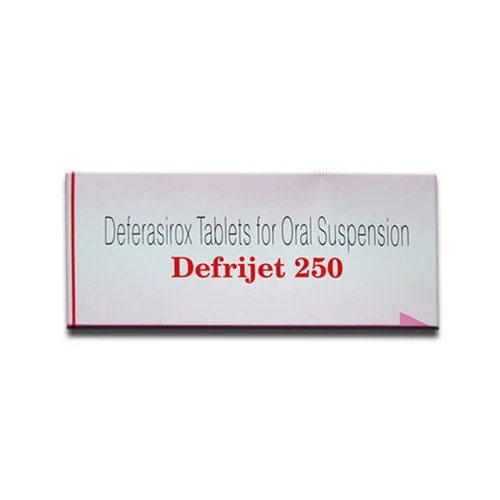
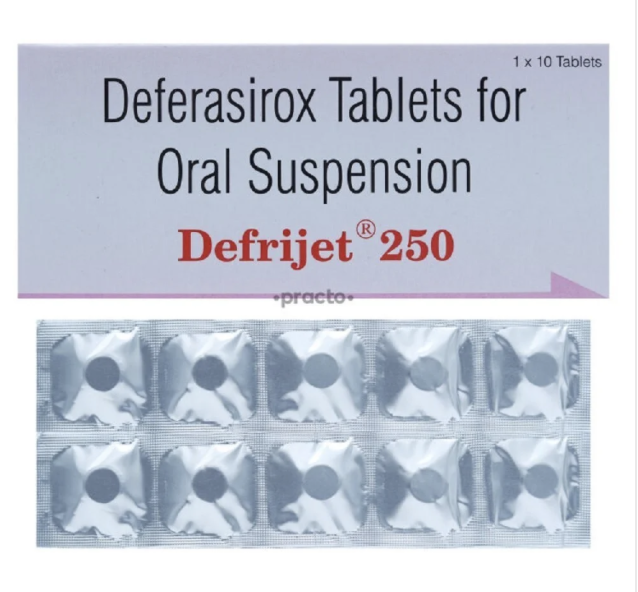
Defrijet 250 MG Tablet
Free
PRODUCT INTRODUCTION
Defrijet 250 Tablet is a medicine used in the treatment of chronic iron overload caused by frequent blood transfusion. It helps remove the excess iron from the body and reduce the risk of it causing organ damage. Defrijet 250 Tablet should be taken on an empty stomach. Take it in the exact dose and duration and take it regularly at a fixed time each day to get the maximum benefit from it. Using of Defrijet 250 Tablet may cause common side effects such as nausea, headache, constipation, rash, and diarrhea. If the side effects persist or worsen, inform your doctor. Before using this medicine, let your doctor know if you have any kidney or liver diseases. You should also let your doctor know if you are pregnant, breastfeeding, or are taking any other medicine for the same condition or other diseases.
USES OF DEFRIJET TABLET
-
Treatment of Iron overload
BENEFITS OF DEFRIJET TABLET
In Treatment of Iron overload
Iron overload, as the name suggests, means excess of iron in the human body. Too much iron can cause organ damage, which can lead to conditions such as cancer, irregular heartbeat and cirrhosis of the liver. By using Defrijet 250 Tablet, this excess of iron can be decreased to safe levels by removing it from the body through stools. This helps to reduce the risk of organ damage and prevents further complications. Keep taking the medicine as prescribed to get the full benefits.
SIDE EFFECTS OF DEFRIJET TABLET
Most side effects do not require any medical attention and disappear as your body adjusts to the medicine. Consult your doctor if they persist or if you’re worried about them
Common side effects of Defrijet
-
Nausea
-
Headache
-
Vomiting
-
Rash
-
Constipation
-
Diarrhea
HOW TO USE DEFRIJET TABLET
Take this medicine in the dose and duration as advised by your doctor. Swallow it as a whole. Do not chew, crush or break it. Defrijet 250 Tablet is to be taken on an empty stomach.
HOW DEFRIJET TABLET WORKS
Defrijet 250 Tablet is an iron-chelating agent. It works by binding to excess iron in the blood and removing it from the body through stool. This securely clears the iron build-up and reduces the risk of organ damage.